- Collecting Liquid Requiring Pretreatment Prior to Discharge
- Correctional Facilities
- Remote Camps & Arctic Installations
- For Facility Conversions Where Cutting the Slab Isn’t an Option
- Where Speed, Simplicity, Flexibility, and Reliability Matter Most
Gravity Interface System (GIS)
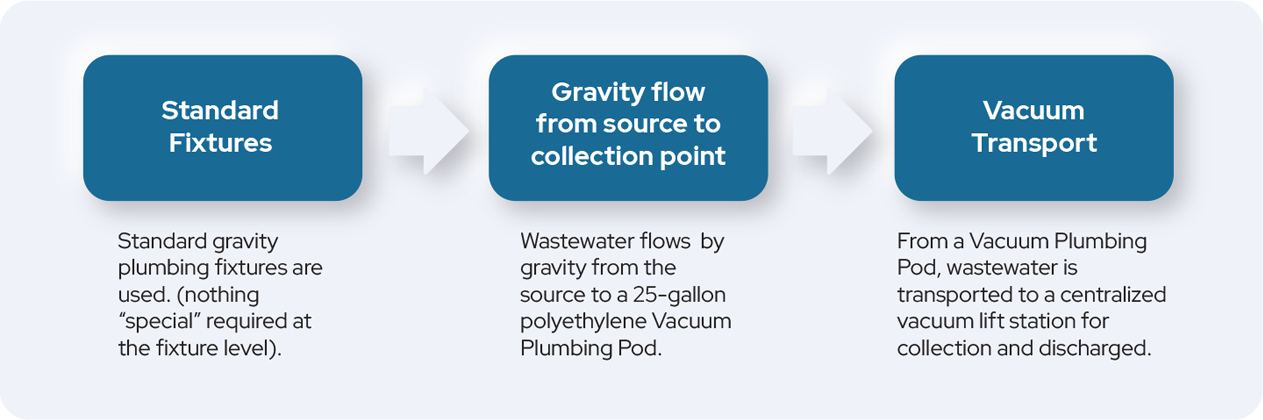
The Gravity Interface System keeps the plumbing system primarily gravity-based (approximately 75%) and uses vacuum only where it adds value — such as moving wastewater through areas with unknown obstacles, limited access, or no slope.
On this page:
more_vert
This technology is best used for:
Standard lift station with enhanced transport
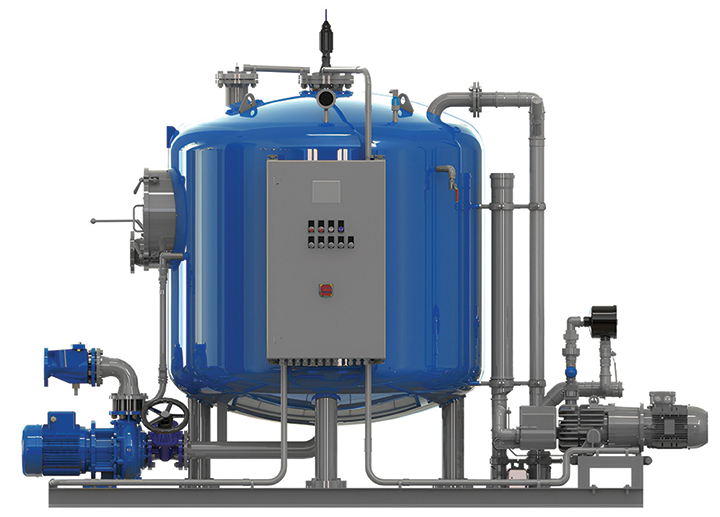
The vacuum lift station is built on the same well-known, standard lift-station architecture used in gravity systems:
- Collection Tank
- Controls
- Alarms
- Discharge System
The difference is simple: the vacuum lift station includes dedicated vacuum pumps that efficiently transport wastewater from the Vacuum Plumbing Pods to the vacuum lift station.
Vacuum pump reliability: The Gravity Interface System uses vacuum pumps from a globally recognized, proven, manufacture with pumps built in the USA since 1979 and service centers throughout the U.S. and worldwide. This ensures fast support, readily available parts, and long-term reliability.
Simple equipment designed for long life
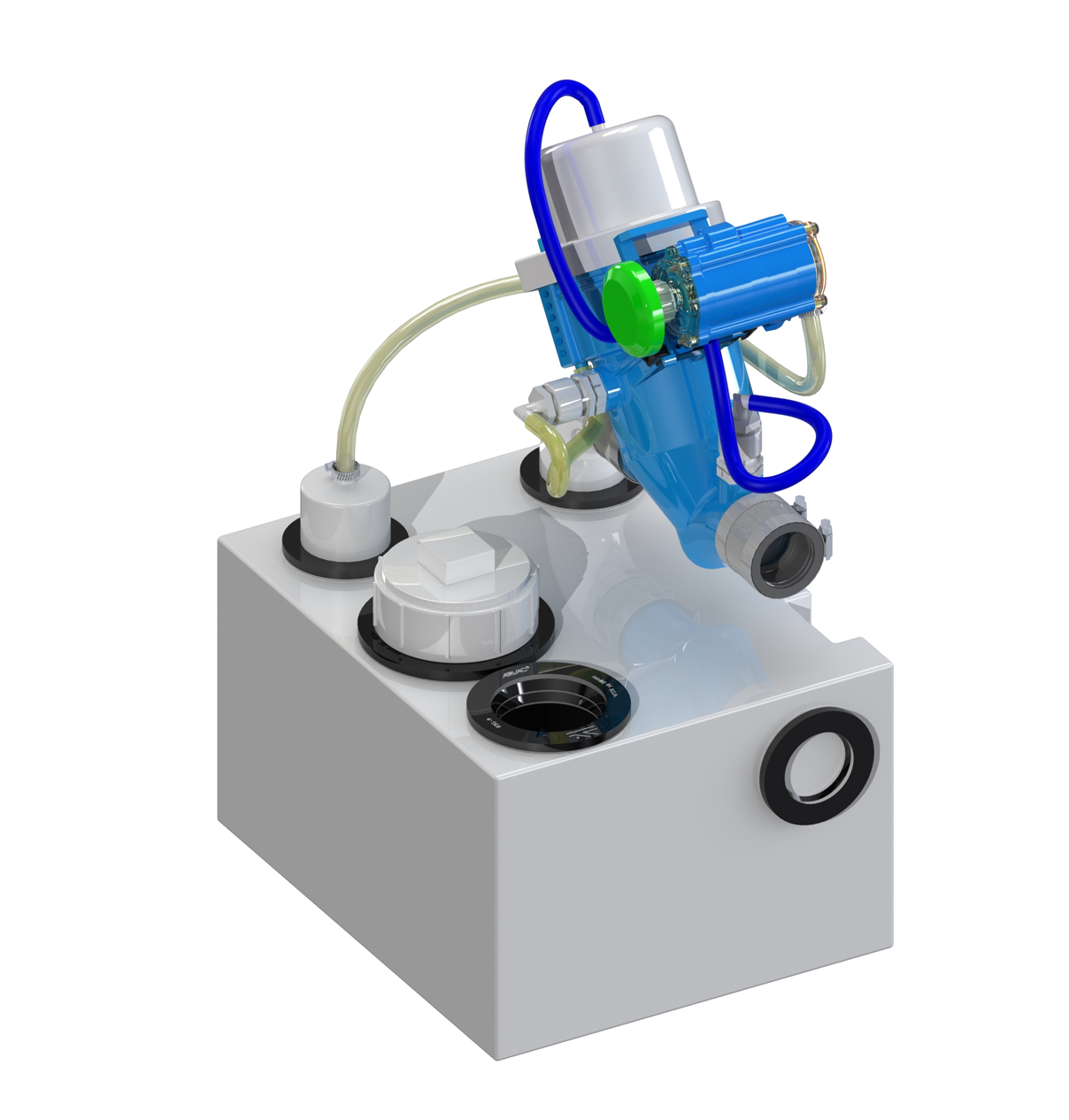
The Vacuum Plumbing Pod is manufactured by Airvac, Inc. in its 100,000 sq. ft. manufacturing facility in Rochester, Indiana (since 1969). Airvac provides a full-service, U.S.-based engineering team supporting service, product support, and project design, ensuring consistent quality and responsive support.
This straightforward Vacuum Plumbing Pod design includes:
- 25-gallon polyethylene collection sump
- Pneumatic transport pump valve (no electric pump motor)
Key reliability advantages:
- Simple, rugged design
- No electrical components at the source or vacuum plumbing pod.
- Typical pump valve rebuild cycle: 10–15 years
- Rebuild cost: $50–$75 per valve
SCADA-Integrated Real-Time Monitoring & Supervisory Control
Each vacuum plumbing pod and vacuum lift station is fully SCADA-integrated, providing real-time data acquisition and remote supervisory control. The system delivers live telemetry, alarm management, and centralized command capability, allowing authorized users to monitor status, adjust operating parameters, and perform diagnostics remotely.
This functionality is especially critical for installations in clean rooms, classified hazardous areas, and other restricted or difficult-to-access locations. Remote supervisory operation reduces personnel exposure, minimizes operational disruption, and ensures safe, responsive, and reliable system management across the vacuum network.
Centralized reliability (fewer failure points)
Instead of relying on many small electrical pumps scattered throughout the facility, each pneumatic Vacuum Plumbing Pod collects the wastewater, drastically reducing the number of distributed mechanical devices.
Result: fewer components to maintain, fewer failure points, and faster troubleshooting.
Practical advantage: power efficiency and uptime
Vacuum Plumbing Pods are pneumatic and do not require electricity
Vacuum lift station includes patented vacuum pump modulation which automatically adjusts pump speed based on real airflow demand; vacuum pumps operate at low speeds (20–30 Hz), reducing power draw and minimizing start/stop cycling, while also lowering heat and noise
Result: lower energy consumption, less wear, and longer pump life.